




Ghosts in the Aether: How to Run a Horror Adventure Where the World Itself Is Haunted
Imagine sailing through the clouds aboard an airship when the crew begins hearing voices coming from the engine room. Nobody is there. The navigation instruments insist the ship is traveling in a straight line, but the stars have stopped moving. A lookout reports seeing another airship following at a distance, its sails torn and its hull covered in something that looks suspiciously like frost. When the characters turn to get a better look, the vessel is gone.
Then the captain announces that someone has been sending messages over the communication system. The messages are coming from the ship itself, and the voice on the other end belongs to a crew member who died three days ago.
Welcome to horror in the skies.
For the third installment of Nerdarchy’s Halloween week, we’re taking the techniques of traditional horror adventures and putting them into an environment where the characters can’t simply walk away. Whether you’re running Dungeons & Dragons, a science fiction RPG, a post-apocalyptic survival game, or an aerial fantasy setting like Aether Skies, there’s something uniquely frightening about being trapped somewhere with nowhere safe to go.
A haunted house is frightening because something might be hiding in the next room. A haunted ship, isolated research station, drifting space vessel, or settlement surrounded by an unnatural storm adds another layer of danger. The characters aren’t simply dealing with something frightening. They’re dealing with something frightening while depending on the very environment around them to stay alive.
That’s an excellent foundation for a horror adventure, and it gives Game Masters plenty of opportunities to create tension without relying on increasingly powerful monsters.
Isolation Is the First Monster
One of the most effective tools in horror RPGs is isolation. Characters who can easily retreat to a nearby town, call for reinforcements, or find a friendly merchant to help them out of trouble have options. Those options can be reassuring, but they also make it harder to create genuine desperation.
Take those options away, and even a relatively minor threat can become terrifying.
An airship traveling through an unfamiliar region of the Aether might lose its navigation equipment during a supernatural storm. A research vessel exploring an ocean trench could lose communication with the surface. A group of survivors might find themselves stranded in a remote settlement after the only road out disappears beneath a strange fog. A spaceship could suffer an engine failure while drifting through a region of space where nobody has traveled before.
The important thing is to give the characters a reason they cannot simply leave. Perhaps their transportation is damaged, the weather makes travel impossible, or the surrounding environment is too dangerous to cross. They might be waiting for rescue, trying to repair something essential, or searching for a way to reach safety.
Don’t make isolation feel like an arbitrary restriction imposed by the GM. Give it a practical explanation that the players understand. If their airship cannot fly because its engines are damaged, they have a problem they can work to solve. If the surrounding storm makes navigation impossible, they have a reason to explore the vessel and search for alternatives.
Once the players understand why they are trapped, you can begin introducing the real horror.
Make the Environment an Active Threat
A dangerous environment doesn’t have to be a passive backdrop. It can actively complicate everything the characters attempt to accomplish.
In an ordinary dungeon, a character might spend several minutes examining a strange mechanism. In a storm-battered airship, that same character might need to work while the deck tilts beneath their feet, lightning strikes the hull, and something enormous moves through the clouds below.
Environmental threats are particularly effective because they force players to divide their attention. They cannot simply focus on defeating an enemy when the ship itself is falling apart.
Consider the different challenges you could introduce during a horror adventure:
A supernatural storm might distort distances, making a nearby island appear hours away despite being directly beneath the vessel. A strange mist could slowly freeze exposed equipment, forcing the characters to protect essential supplies. A damaged ventilation system might introduce an unfamiliar airborne substance that causes hallucinations. An abandoned settlement could experience earthquakes at irregular intervals, making every exploration attempt more dangerous.
In Aether Skies, the dangers of the Aether provide an especially useful foundation for this kind of adventure. Storms, unstable skyways, strange elemental phenomena, and isolated settlements give the GM plenty of opportunities to make the environment feel hostile. A crew might be perfectly capable of defending itself against ordinary monsters, but what happens when the weather, the ship, and the creatures outside all become threats at the same time?
For other RPG settings, simply replace the Aether with whatever environmental challenge makes sense. Space, deep oceans, frozen wilderness, radioactive wastelands, and underground complexes can all provide the same sense of vulnerability.
The environment should challenge the characters without making their efforts feel pointless. Give them ways to respond, prepare, and overcome the dangers, but make every solution require some thought or sacrifice.
Make Resources Matter

Survival horror becomes much more effective when the characters cannot assume they have everything they need.
In many fantasy RPGs, characters accumulate healing potions, spell components, ammunition, food, and other useful equipment. These resources can make adventuring more manageable, but they can also reduce the tension of dangerous situations. When running a horror adventure, consider what happens when those resources become limited.
Perhaps the airship has enough fuel to reach its destination, but only if the crew stops using certain systems. Maybe the characters have a limited supply of clean water, and the only available replacement comes from a source they suspect is contaminated. A medical facility might have enough supplies to treat everyone, but only if the party can restore power before the remaining equipment fails.
You don’t necessarily need to track every ration, battery, or piece of ammunition. Instead, focus on resources that matter to the adventure. If the characters are stranded aboard an airship, fuel, food, navigation equipment, and access to safe shelter might become important. If they’re exploring a derelict research station, oxygen, medical supplies, and functioning communication equipment could be more relevant.
The real trick is making the players choose what matters most.
Perhaps they can restore power to the navigation system or the medical bay, but not both. They might have enough supplies to protect the entire crew for another day or keep the ship running long enough to escape. Every decision becomes an opportunity to reveal character priorities and create tension.
These decisions also give the GM an excellent way to introduce complications without relying on combat. A shortage of supplies might force the characters to negotiate with someone they don’t trust, explore a dangerous location, or make a difficult decision about who receives help.
Let the Characters Doubt What They See
Few things are more unsettling than discovering that your senses cannot always be trusted. Horror adventures can use this uncertainty to create tension, especially when the characters are isolated and have limited ways to verify what they’re experiencing.
A crew member reports seeing lights moving through the clouds, but the ship’s instruments show nothing. A character hears their name whispered over the communication system, only to discover that nobody else heard it. Someone wakes from a nightmare and finds a door standing open that was locked before they went to sleep.
These events don’t necessarily need to be hallucinations. They could be manifestations of a supernatural force, evidence of an intelligent creature observing the party, or clues that the characters have entered an environment where the normal rules of reality no longer apply.
The best approach is to establish uncertainty without making the players feel as though their choices don’t matter. If everything they experience is randomly false, investigation becomes frustrating. Instead, provide consistent clues that allow them to develop theories and test their assumptions.
For example, perhaps the ship’s communication system occasionally picks up messages from another vessel. The voices sound familiar, but the information they provide is always slightly wrong. The characters might eventually realize that the messages are being transmitted from a future version of their own ship, or that something is imitating the crew based on information it has gathered.
Give the players enough information to become suspicious, but don’t rush to explain everything. Sometimes the most frightening moment in a horror adventure is when the players finally understand that something has been happening all along.
Introduce Threats That Don’t Need to Fight the Characters
Not every horror adventure needs a monster that charges into the room and attacks the party. In fact, some of the most memorable threats are creatures or forces that don’t behave like traditional RPG enemies.
Imagine something enormous swimming through the clouds beneath an airship. The characters can see its silhouette moving through the mist, but it never approaches. Every time the ship changes course, the creature follows. It might be hunting the vessel, protecting something, or simply curious about the strange object traveling through its territory.
A ghostly figure might appear in different parts of a research station, always watching the characters from a distance. A strange intelligence might communicate through the ship’s computer, offering assistance while quietly manipulating the crew. An ancient creature could be responsible for the supernatural storm surrounding the party, but attacking it might be impossible or completely unnecessary.
These threats create opportunities for investigation, negotiation, avoidance, and creative problem-solving. They also help distinguish horror adventures from ordinary combat encounters.
When designing a threat for this kind of adventure, consider what it wants. Does it want to feed? Protect its territory? Escape confinement? Communicate with someone? Recreate an event from its past? Understanding the creature’s motivation gives you more ways to involve the characters than simply having it attack whenever they enter a particular room.
You can also make the threat more frightening by allowing the players to see evidence of its presence before they encounter it directly. A damaged section of the hull, missing crew members, strange markings, or equipment that has been rearranged can all suggest that something has been moving around the vessel.
Sometimes the characters will be more frightened by what they imagine is waiting outside than by whatever they eventually discover.
Give the Players Difficult Choices

Horror adventures become particularly memorable when the characters must decide what they’re willing to sacrifice.
Imagine the party discovers that the airship’s engine is being affected by a supernatural presence. They can stop the phenomenon, but doing so will destroy the engine and leave them stranded in the middle of a dangerous region. Alternatively, they can keep the engine running, but the strange presence will continue spreading through the vessel.
Neither option is particularly appealing.
Perhaps the characters discover another survivor aboard an abandoned vessel, but helping that person means using supplies the party desperately needs. Maybe they can rescue an entire settlement, but only by abandoning their damaged ship. They might even discover that the only way to stop a supernatural threat is to release something else that has been imprisoned for centuries.
These choices are more effective when they involve something the players care about. A decision between saving a beloved NPC and protecting a valuable piece of equipment is much more interesting when the NPC has an established relationship with the party.
Don’t make every decision a question of choosing who dies. That can become repetitive and discouraging. Instead, offer competing priorities, uncertain outcomes, and situations where the characters must decide which risks they are willing to accept.
Horror is often about vulnerability, and difficult choices are an excellent way to make players feel the weight of that vulnerability.
The Horror of Being Responsible for Everyone
One particularly effective way to increase tension is to give the characters people they must protect.
An isolated airship might carry a dozen passengers in addition to the adventurers. A research station could have a small crew of scientists and engineers. A settlement might contain families who depend on the party to keep them safe. These NPCs give the characters responsibilities beyond their own survival.
Suddenly, every dangerous decision has additional consequences.
If the party splits up to investigate strange noises, who watches the passengers? If the characters use the last of their medical supplies to treat an injured companion, what happens when someone else gets hurt? If they abandon the vessel, are they willing to leave everyone else behind?
This technique also gives you a way to make the environment feel alive. NPCs can become frightened, argue about the best course of action, make mistakes, or refuse to cooperate. Some might have useful skills, while others could possess information the party desperately needs.
You don’t need to create elaborate backstories for every passenger or crew member. A few recognizable personalities are enough to make the group feel like people rather than interchangeable statistics.
Give the party someone competent they can rely on, someone whose fear makes the situation worse, and someone who knows more than they’re willing to admit. These relationships can provide plenty of roleplaying opportunities and make the eventual outcome of the adventure more meaningful.
An Adventure Hook: The Last Ship Through the Storm
Let’s put these ideas together with an adventure scenario you can adapt to almost any RPG system.
The characters are traveling aboard a vessel that must cross a dangerous region to reach its destination. It might be an airship sailing through the Aether, a spaceship crossing an unstable region of space, a submarine exploring an unfamiliar ocean trench, or a transport vehicle crossing a devastated wasteland.
The journey begins normally enough, but the crew soon discovers that the navigation instruments are behaving strangely. The vessel appears to be traveling in a straight line, yet familiar landmarks are appearing repeatedly. A lookout reports seeing another vessel ahead, although the captain insists there are no other ships in the region.
Then the communication system activates.
A voice announces that the vessel is approaching its destination and warns the crew not to stop. The voice belongs to the ship’s previous captain, who supposedly died several years earlier.
As the characters investigate, they discover that the vessel is experiencing several unusual problems. Equipment stops working without explanation, crew members disappear from locked compartments, and strange lights move through the surrounding environment. Some of the crew insist that they have seen people walking across the exterior of the vessel, despite the conditions making such a thing impossible.
Eventually, the characters discover an abandoned vessel traveling alongside their own. Its crew is gone, its systems are still operating, and its navigation records show that it has been traveling through the region for decades without reaching its destination.
The two vessels might be connected by a supernatural phenomenon, an ancient creature, a malfunctioning magical artifact, or something much stranger. Perhaps the abandoned vessel is a future version of the characters’ own ship. Perhaps it is a prison, and the thing that escaped has been following them ever since.
The characters must determine what is happening, keep their vessel functioning, and decide whether reaching their destination is worth the danger.
Adapting the Adventure to Your Campaign
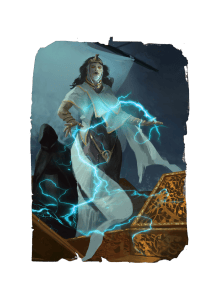
In Procession, characters will encounter Apophis and the ghostly ship she apparates upon. What happens next is up to the group. Just one of many D&D encounters in Out of the Box: Encounters for 5th Edition on Kickstarter. [Art by Kim Van Deun]
For a science fiction RPG, the same scenario could take place aboard a research vessel that has entered an unexplored region of space. The abandoned ship might be transmitting messages from a crew that hasn’t been born yet, or the phenomenon could be an alien intelligence experimenting with time and perception.
For a modern horror or supernatural investigation game, the characters might be passengers aboard a train traveling through an isolated region. Stations appear and disappear, the same passengers board repeatedly, and the conductor insists the train has never stopped. Eventually, the characters realize that the train is traveling somewhere it was never meant to go.
For a post-apocalyptic campaign, the party could be traveling through a radioactive wasteland in a heavily fortified vehicle. A strange storm forces them to take shelter in an abandoned facility, where the inhabitants seem to have vanished during an evacuation that hasn’t happened yet.
The details change, but the underlying adventure remains the same: the characters are isolated, their environment is becoming increasingly dangerous, and something is happening that they don’t fully understand.
Bring Horror to Your Next RPG Adventure
The most effective horror adventures don’t necessarily require powerful monsters, complicated mechanics, or elaborate supernatural explanations. They require a situation that makes the characters vulnerable, an environment that creates meaningful challenges, and a threat that gives the players a reason to question whether they’re truly safe.
Isolation makes ordinary problems more dangerous. Limited resources force difficult decisions. Unreliable information creates uncertainty, while threats that don’t immediately attack give the players something to investigate and fear. Add NPCs who depend on the characters, and suddenly every decision carries additional weight.
These techniques work in almost any tabletop RPG, from traditional fantasy adventures to modern supernatural mysteries and science fiction survival horror. You can even introduce them into an existing campaign without changing its overall direction. A routine journey can become a terrifying experience simply because something goes wrong along the way.
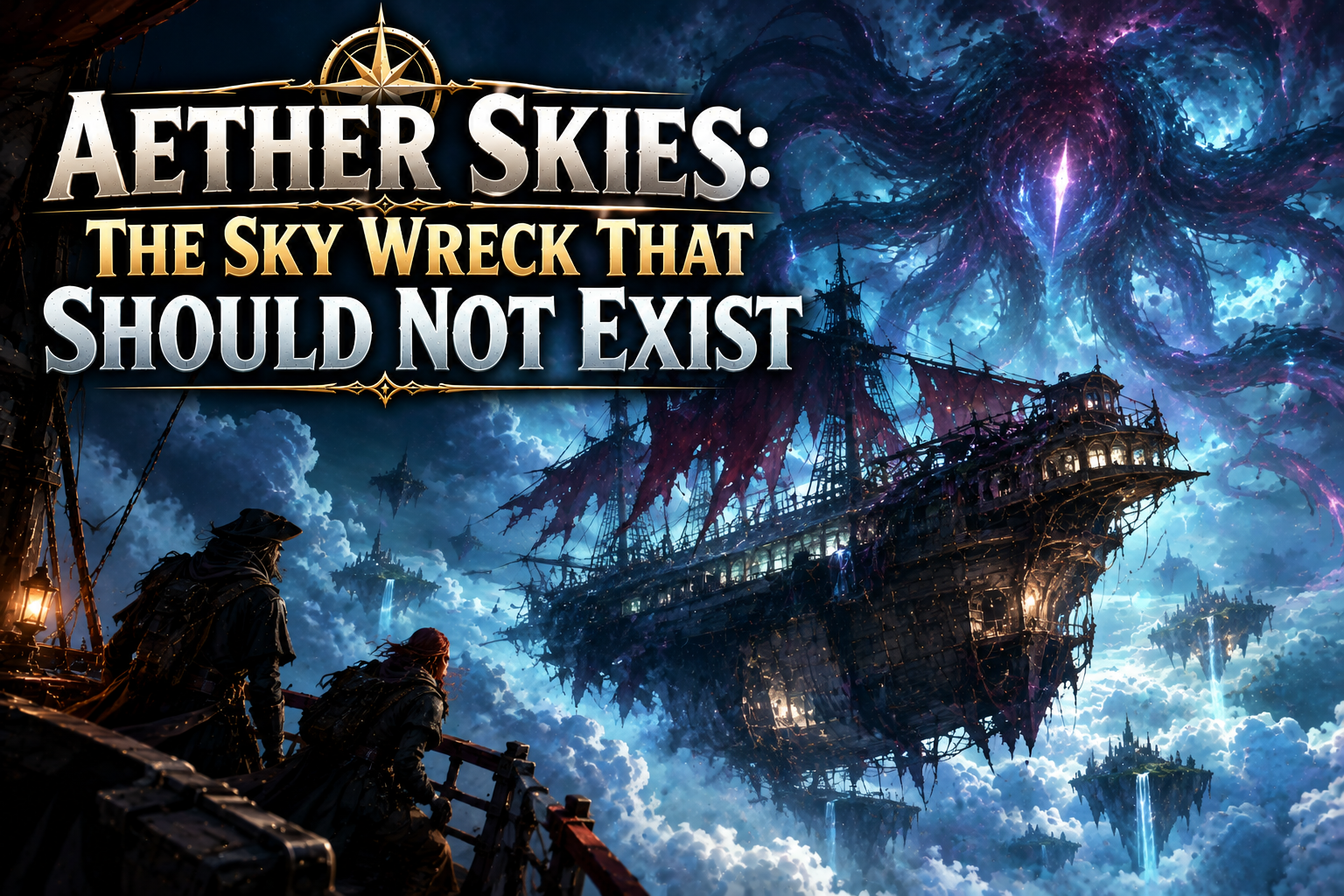
For Aether Skies, the possibilities are particularly exciting. The sky is already a dangerous place, and the characters never know what might be waiting beyond the next storm. A lost airship, a forgotten settlement, or an unexplained disturbance in the Aether could become the starting point for an adventure that challenges the party in ways they never expected.
Halloween might be the perfect excuse to introduce these ideas, but the best horror adventures are the ones players remember long after the decorations come down.
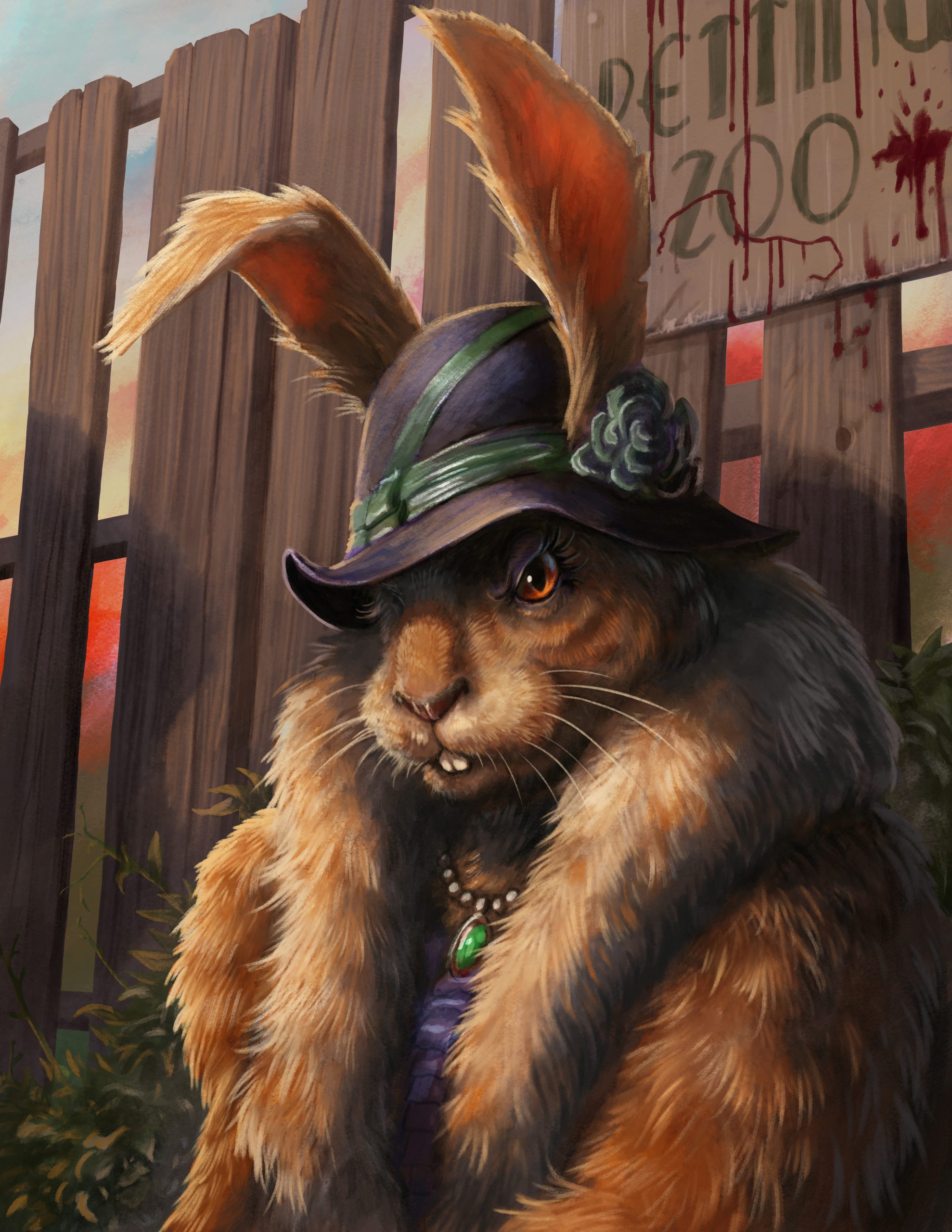
Tomorrow, we’re taking a different approach to Halloween horror as we head into the world of Zoo Mafia. The streets are full of suspicious characters, rival crews are making their moves, and someone has decided that Halloween night is the perfect time to pull off a dangerous heist. Just remember: when the lights go out, the most dangerous creature in the room might be the one holding the stolen goods.
Stay nerdy, keep your eyes on the horizon, and whatever you do, don’t answer the radio if you hear your own voice calling for help.


No Comments